From Political Science to Frontend: Nobody's Coming to Save You
Eleven restarts, three mentors, one unpaid web app, and the half of this title I got wrong.
I studied Political Science, which mostly taught me chew and pour (memorise it, write it in the exam, forget it by Friday). I forgot all of it after the exams. Every course.
After national service (Ghana's compulsory year of work after university), I knew it had to be tech. I was done with chew and pour.
So I joined a bootcamp. And failed it.
I'd never done anything in tech. I didn't understand anything, and if I'm honest, I wasn't focused either.
The first thing I built that I was properly proud of was a Google search results page for Lionel Messi. Knowledge panel, Top Stories, "People also ask: Messi vs Ronaldo", the lot. Just HTML and CSS. One of my mentors looked at it and thought it was a real search.
I still remember how that page works. I can't tell you a single thing from my second-year political science exams.
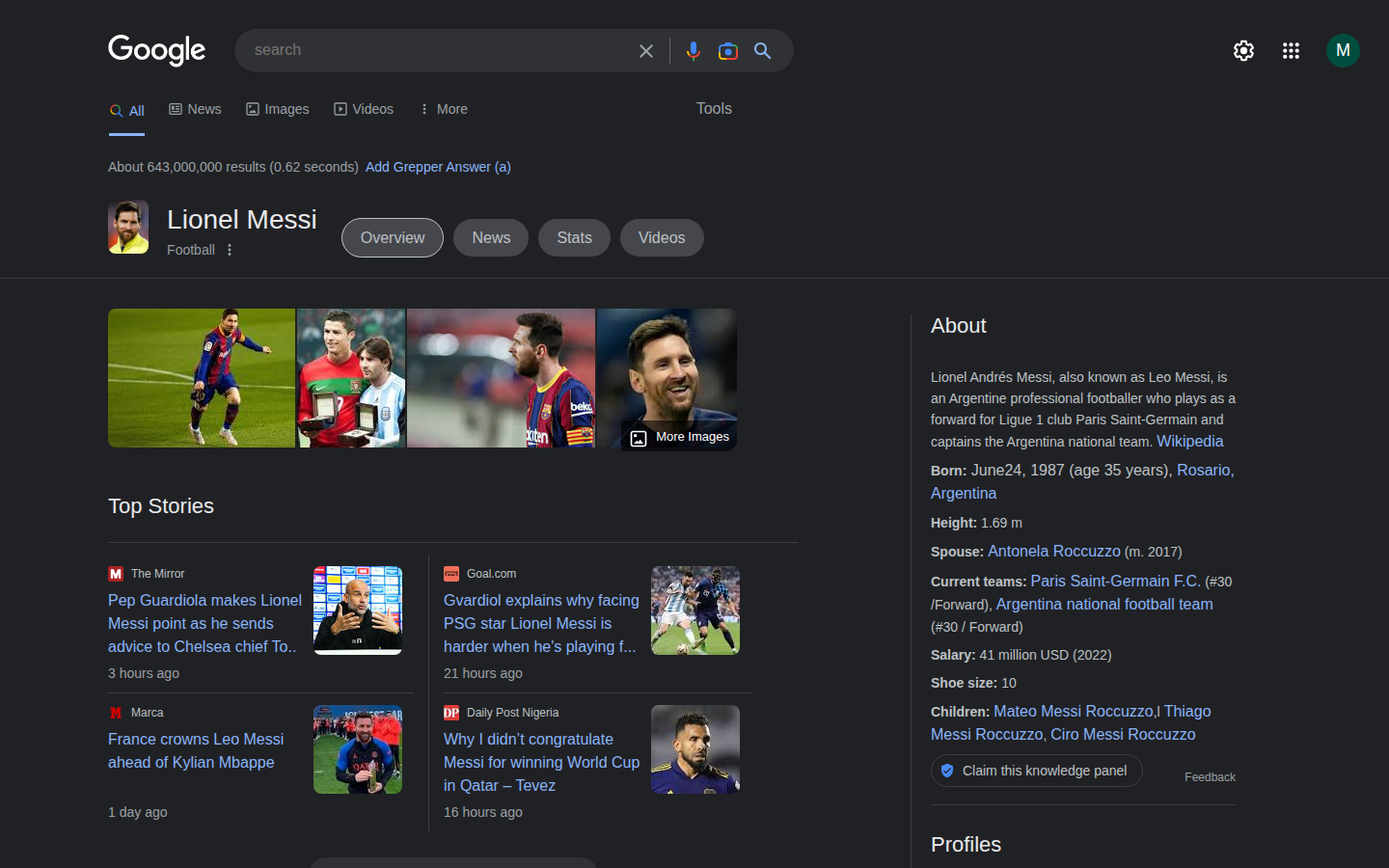
When the HTML and CSS are convincing enough to fool your mentor.
The degree isn't the obstacle: nobody has ever asked me about it
Not once has anyone said "but your degree is in Political Science." Not an interviewer, not a client. They ask what I've built and whether I can do the thing.
I'd love to tell you the degree secretly prepared me for this. It didn't. It gave me exactly one useful thing: I knew, very clearly, what I didn't want to do next.
A degree you never use isn't a wasted degree. Sometimes it's just the most expensive way to find out what you don't want.
The bootcamp ends and nothing happens: the gap nobody mentions
The second bootcamp ended with a group final project. Some of my teammates were very lazy. I didn't care. I genuinely enjoyed building it.
So I assumed the next part was simple. An internship. Or honestly, any job.
Boy, was I dreaming.
I applied and applied, and the rejections just kept flowing.
The one time I got a better response, it was a recorded video interview (no person on the other end, just questions on a screen and you answering into your webcam). I'd answer a question, click next, and my internet would drop. I'd refresh. Back to question one.
I restarted that interview eleven times.
I never saw the last question.
I went into a very deep and long depression. I had an inferiority complex. Was I not good enough? I pay attention to details. I'm an excellent problem solver. So why didn't anyone want to give me a chance?
Now I look at that interview as a frontend developer, and the fix is almost boring: save each answer as soon as it's recorded, so a refresh picks up where you left off instead of throwing you back to question one. Someone skipped that. I paid for it eleven times.
Here's what I didn't understand then: every one of those rejections happened before anyone looked at my work. Nobody opened a project. Nobody saw what I could build. The gap wasn't between me and the job. It was between my work and anyone's eyes.

When you refresh and the interview welcomes you back to question one. Again.
Nobody's coming, but people will help if you ask a real question
Okay, I owe you a confession. The title of this post is only half true.
After I failed the first bootcamp, I didn't want to fail the second one. So I asked someone already in the field to mentor me. He said yes. He made it easy. He shared resources. I passed.
Then, in the middle of all those rejections, another mentor asked me to build something for him. A loan app. The whole brief was one sentence: people apply, get reviewed, then get accepted or rejected.
I designed and built it from that one sentence, on my own. This was before I knew about AI. Then he started showing it to people and sending me their reviews. They couldn't understand how I'd made something from so little context.
It was the best.
Yes, I spent my rejection era building an app whose whole job was rejecting people. The irony didn't occur to me until much later.
And a friend kept recommending me to people, and kept sending me jobs that were hiring.
Those people are what pulled me out. If they didn't give up on me, why should I?
You'll read that you should never ask a stranger "will you mentor me?" because it's too big a thing to ask. I asked exactly that. He said yes. I still ask for help now.
Nobody came and did the work for me. I built every single thing. But when nobody would look at my work, these people made others look. That's the half of the title I got wrong.
Learn to measure your own work: nobody is going to quantify it for you
Those recommendations turned into two real jobs. One was a website for a construction company. I built it. I got paid.
The other was a web app for a big utility company. Again, I got the context, I built it, and then I added the client as a collaborator on GitHub.
He stopped answering my calls.
I never got paid.
Now I have a rule for everything. These are the three that matter most:
60% upfront. The other 40% before the project goes live, or 20% halfway and 20% before launch. Nothing goes live unpaid.
No looking for inspiration until the deposit lands. Not even a quick scroll.
Nobody gets access to the code until they've paid for it. No repo, no collaborator invite, nothing.
That's what measuring your own work actually means. Nobody is going to put a number on it for you, so you put one on it yourself, before the work starts, not after.

When the client asks for repo access before the deposit has landed.
So, start before you feel ready
I failed a bootcamp. I restarted one interview eleven times. I built an entire web app for someone who stopped picking up the phone.
None of that waited for me to feel ready.
So here's the whole post in one line: build real things, let the people who believe in you put them in front of others, and put a price on your work before anyone touches it.
You're going to feel like you're not good enough for a while. I did. That feeling isn't information. And that's perfectly okay.
I have fibre broadband now. I still haven't seen the last question.
Who's the person who didn't give up on you, and have you told them?